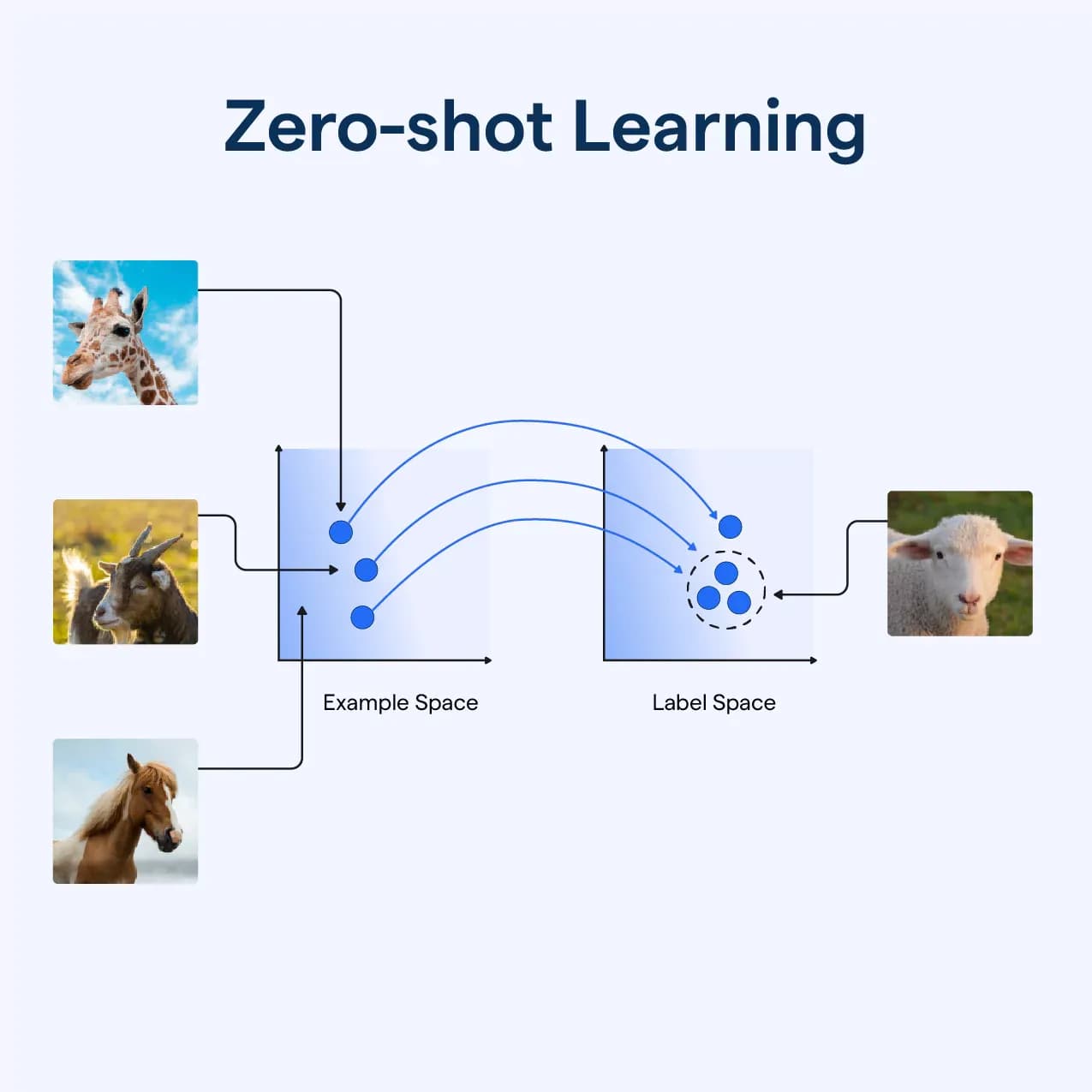
Zero-shot learning is a cutting-edge concept in the field of artificial intelligence and machine learning that enables models to recognize and categorize data they have never encountered during training. Unlike traditional supervised learning, which relies on labeled examples for every category, zero-shot learning empowers systems to generalize knowledge and infer properties about unseen classes based on semantic relationships and auxiliary information. This approach is especially valuable in situations where obtaining labeled data is challenging or impossible, making it a significant step forward in creating more adaptable and intelligent AI systems. Below, discover ten fascinating insights about zero-shot learning that shed light on its origins, mechanisms, applications, challenges, and future directions.
Zero-shot learning emerged as a response to limitations in traditional machine learning models, which require extensive labeled datasets for each category. First introduced conceptually in the early 2000s and gaining momentum in the 2010s, it draws inspiration from human cognitive ability to identify new objects or concepts without direct prior experience. The foundational idea is to leverage semantic information—such as attributes, textual descriptions, or embeddings—to allow models to infer unseen classes. This paradigm expands the boundaries of machine learning models from purely empirical pattern recognition to semantic understanding.
At its core, zero-shot learning relies on establishing a link between the known and unknown through a shared semantic space. Typically, models use embeddings such as word vectors or attribute-based descriptions that represent both seen and unseen classes. During training, models learn to associate visual or input features with these semantic representations. When encountering unseen categories, the model infers their classification by mapping observations to the nearest semantic embeddings. This mechanism allows zero-shot learning systems to perform classification tasks without direct examples of every category.
Zero-shot learning differs significantly from few-shot learning and traditional supervised learning. While traditional learning requires comprehensive labeled datasets for each class, and few-shot learning needs a small number of labeled examples, zero-shot learning eliminates the need for any examples of the target classes. This capability is crucial for handling rare or newly emerging categories where labeled data may not be available, thereby enhancing flexibility and scalability in AI applications.
Zero-shot learning has found practical applications in many domains where dataset completeness is challenging. In natural language processing, it enables language models to understand and generate content about concepts never explicitly taught. In computer vision, zero-shot models assist in recognizing rare or novel objects. Other applications include medical diagnosis for rare diseases, recommendation systems that infer user preferences for unseen items, and robotics where adaptability to novel environments is essential.
Semantic embeddings are crucial for zero-shot learning as they provide a continuous vector space that encodes the relationships between concepts. Common approaches include using word embeddings like Word2Vec, GloVe, or contextual embeddings from models such as BERT. These embeddings capture semantic similarity, thereby enabling models to link unseen classes to seen ones via shared attributes or textual definitions. Effective embedding strategies greatly influence zero-shot learning performance.
Despite its promise, zero-shot learning faces several challenges. One prominent issue is the "domain shift" problem, where the distribution of attributes in unseen classes may differ from those in the training data, leading to performance degradation. Additionally, semantic embeddings may not perfectly capture the nuances necessary for fine-grained differentiation between categories. Evaluating zero-shot learning systems also presents difficulties because standard benchmarks vary, and real-world scenarios often introduce noise and ambiguity.
Recent developments in neural architectures have propelled zero-shot learning forward. Transformer-based models and large-scale pretrained language models have been integrated with zero-shot techniques, enabling richer contextual understanding and better generalization. Models like GPT and CLIP combine visual and textual modalities, allowing zero-shot recognition of images based solely on a textual description, dramatically enhancing zero-shot capabilities in multimodal AI.
Zero-shot learning also influences AI ethics by potentially reducing biases arising from limited labeled data in underrepresented classes. By leveraging external semantic knowledge, models can make more balanced predictions. Furthermore, it enhances accessibility, as less annotated data is required to deploy functional models, enabling broader application of AI in low-resource settings where data labeling is expensive or impractical.
The future of zero-shot learning is promising, with ongoing research focusing on improving robustness, accuracy, and interpretability. Integration with few-shot and transfer learning techniques aims to create hybrid models that maximize knowledge efficiency. Additionally, expanding zero-shot learning to complex tasks such as reasoning, planning, and real-time adaptation will further elevate its significance in autonomous systems and artificial general intelligence.
Leading technology companies have increasingly adopted zero-shot learning techniques to enhance their products. For instance, image recognition platforms use zero-shot learning to identify new object categories without retraining. Voice assistants and chatbots employ zero-shot capabilities to understand novel queries. In healthcare, AI models use zero-shot approaches for early detection of unusual medical conditions. These implementations underscore zero-shot learning’s practical value and growing impact across sectors.
Zero-shot learning represents a transformative leap in artificial intelligence, enabling machines to recognize and reason about entirely new concepts without prior direct examples. Its foundation in semantic understanding mirrors human learning capabilities, promising more flexible, scalable, and adaptive AI systems. Despite ongoing challenges, advances in embeddings, model architectures, and multimodal approaches continue to push the boundaries of what zero-shot learning can achieve. As industries adopt these methods, zero-shot learning not only elevates AI functionality but also raises profound questions about the future of machine cognition and autonomy. How will zero-shot and related paradigms redefine our relationship with intelligent machines in the years to come?